INDIA
Place value and a dot
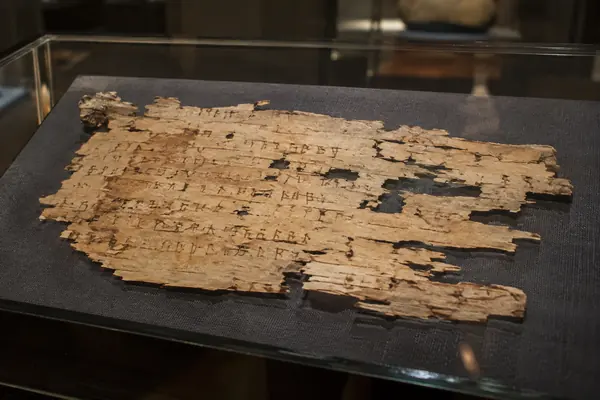
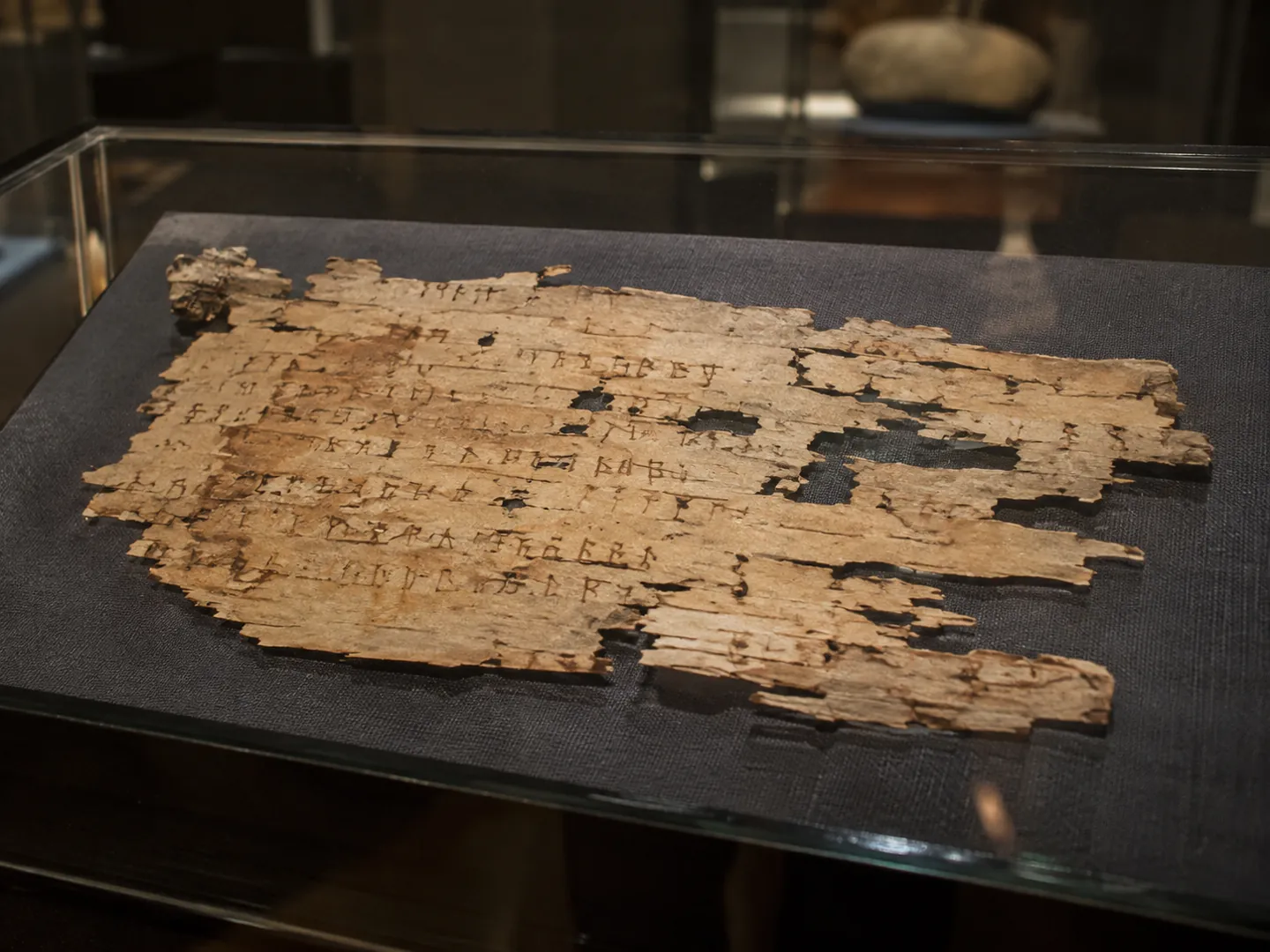
The Bakhshali manuscript uses a dot as a placeholder for tens, hundreds and thousands. Carbon dating puts parts of it as early as the 3rd or 4th century.
See the dating doodlenumber
A SHORT HISTORY OF DIGITS
The digits on your phone were born in India.
Follow the timeline
1202Liber abaci reaches Europe
They took centuries to reach Europe, passing through scholars in Baghdad and a Pisan merchant's son who learned them in North Africa. The key to the whole system was a small dot that became zero.
Updated
THE SHORT ANSWER
We call them Arabic numerals.
The system itself began in India.
INDIA
The Bakhshali manuscript uses a dot as a placeholder for tens, hundreds and thousands. Carbon dating puts parts of it as early as the 3rd or 4th century.
See the datingBAGHDAD
Al-Khwarizmi, a scholar at Baghdad's House of Wisdom, wrote on the numerals. A Latin version of his book gave us the word algorithm.
Read moreEUROPE
In 1202 Fibonacci's Liber abaci introduced the system to Europe. Its rabbit puzzle gives 1, 1, 2, 3, 5, 8, 13.
Follow the timelineA TIMELINE IN FIVE STEPS
Pick a moment to see what it tells us about how our digits developed. The bar shows how far along the journey from India to Europe the system had come.
Dates from the University of Oxford and the MacTutor History of Mathematics archive at the University of St Andrews.
TWO NUMBERS WORTH KNOWING
One finding from a laboratory in Oxford,
one date from medieval Pisa.
≈ 5 centuries
How much older the Bakhshali manuscript proved to be
Carbon dating in 2017 found the manuscript dates from as early as the 3rd or 4th century, about five centuries older than scholars had believed. Before that, a 9th-century temple inscription in Gwalior was thought to hold India's oldest placeholder zero.
CARBON DATING · OXFORD
1202
The year the system was introduced to Europe
Fibonacci's Liber abaci introduced the Hindu-Arabic place-valued decimal system and the numerals to Europe. He wrote of learning the art of the Indians' nine symbols in Bugia, now Bejaia in Algeria.
LIBER ABACI · ST ANDREWS
The Bakhshali manuscript has 70 leaves of birch bark and has been kept at the Bodleian Library in Oxford since 1902.

FOUR THINGS TO TRY
Our numerals are so familiar that it is easy to forget how clever they are. A few small experiments show what place value and zero do for us.
Write 7, then 70, then 700. The same symbol means seven, seventy or seven hundred depending on its place. That is place value.
Try writing 205 with no symbol for the empty tens column. The Bakhshali dot solved exactly this problem.
Start with 1, 1 and add the last two numbers each time: 2, 3, 5, 8, 13, 21, 34, 55.
Every time you hear it, you are hearing the Latin version of al-Khwarizmi's name.
BAGHDAD AND THE WORD ALGORITHM
Al-Khwarizmi was born around 780 and died around 850. He worked at the House of Wisdom in Baghdad, an academy founded by Caliph al-Mamun where Greek scientific works were translated.
His book on the Indian numerals is lost in Arabic and survives in a Latin translation, Algoritmi de numero Indorum, al-Khwarizmi on the Hindu art of reckoning. The word algorithm comes from his name as it appears in that title.
Questions
Europeans learned them from the writings of Middle Eastern mathematicians, so the name stuck. Britannica says the numerals originated in India in the 6th or 7th century and reached Europe through those writings.
The oldest known placeholder zero is a dot in the Bakhshali manuscript. In 2017 carbon dating found parts of it date from as early as the 3rd or 4th century.
Brahmagupta's text of 628 AD, the Brahmasphutasiddhanta, is the first document to discuss zero as a number, according to the University of Oxford.
He made it famous in Europe through the rabbit problem in Liber abaci of 1202, where each number is the sum of the two before: 1, 1, 2, 3, 5, 8, 13.
In Bugia, now Bejaia in Algeria, where his father held a post at the customs for Pisan merchants. Fibonacci wrote of learning the art of the Indians' nine symbols there.
ABOUT THIS NAME
doodlenumber.com is part of the DoodleSale portfolio. It isn't in an auction right now, but you can ask about leasing it.